



We have shown here the ways in which the University of Münster is connected to Israeli institutions and is complicit in the oppression of Palestinians.
On this page, you will find more information on why Israeli universities are the subject of boycott campaigns, as well as about the Israeli universities with which the University of Münster cooperates through research projects or exchange programmes. Sources can be found at the bottom of the page.
We call on the University of Münster to end its cooperation and research projects with these Israeli institutions. You can sign the petition here.
Why should we boycott Israeli universities?
Israeli universities are not neutral spaces of free academic inquiry. They are pillars of Israel’s system of oppression. They develop weapons systems and provide legal and moral justification for the colonization of Palestine. Research and teaching are actively used to sustain and legitimize the Israeli occupation and the genocide in Gaza.
An academic boycott is therefore not an attack on scholarship, but rather a form of resistance against the use of academic institutions and research in support of oppression.
Academia as weapon of Zionism
Already during the founding period of Israel, science was understood as a central tool for advancing Zionist goals. The first Prime Minister, David Ben-Gurion, described research as a decisive means of realizing the Israeli project. This ideological foundation continues to shape the Israeli higher education system today: science is intended to secure military, economic, and demographic control over Palestine.
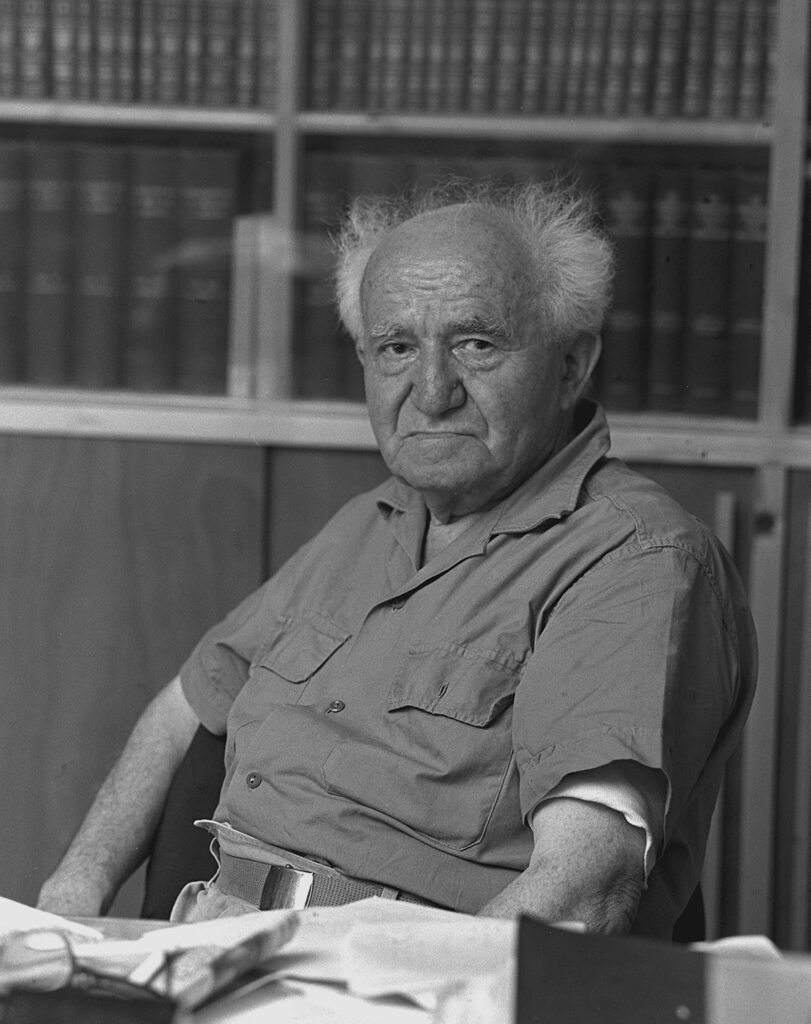
“Science is one of the most powerful weapons for the realization of Zionism.”
Ben-Gurion
Universities as instruments of political strategies
Israeli universities are deliberately located in places where they advance political objectives. The location of a university is rarely accidental; rather, it is intended to consolidate Jewish dominance, facilitate land appropriation, and marginalize the Palestinian population.
The Jerusalem campus has been used to strengthen Jewish control over the city, while the Negev campus (closely linked to military research) forms part of the so-called “Judaization” of the south. Research is also conducted there on technologies that contribute to the control and displacement of the Bedouin-Palestinian population.
Military and Security ties
Many Israeli universities cooperate directly with the military and the weapon industry. Through joint research projects, hackathons, and innovation programs, technologies for drones, surveillance systems, and AI are developed, some of which are used in military operations in Gaza and the West Bank. University campuses also host security, focused think tanks that provide strategic and legal frameworks for military operations. Academic institutions have contributed to the development and dissemination of doctrines that are used to justify the use of disproportionate force against civilian populations, including the so-called Dahiya Doctrine.
Legal justification of violence
Israeli universities also play a significant role in the legal sphere. They educate lawyers and military personnel who later work within the judicial system or the armed forces, where they contribute to providing legal justification for acts of state violence. In this way, the institutional foundations for the continuation of the occupation are maintained.
This is particularly significant given that Israel has been under an official state of emergency since its founding, a status that is renewed annually by the Knesset. This framework grants the military and security apparatus extensive powers and allows them to intervene in political and civilian affairs beyond what would ordinarily be permitted. As a result, the boundaries between the judiciary, politics, and the military are highly blurred.
Maintaining occupation
A particularly clear example is Ariel University in the West Bank. It was established as the academic center of the Israeli settlement of Ariel, which is located in occupied territory. Ariel is now promoted as a student city, and students are encouraged to become involved in activities that maintain the settlement’s continued development.
Students are offered subsidized housing in settlements and scholarships linked to service activities in Ariel. In addition, students may receive academic credit points for participating in night watch duties and agricultural work in 28 settlement outposts on Palestinian land in the occupied West Bank.

Universities that collaborate with the University of Münster
Bar-Ilan University
Part of Israeli militarism:
- The Faculty of Engineering at Bar-Ilan University has collaborated with Elbit Systems, Israel’s largest weapons manufacturer, on technological innovation through hackathons (events involving students and industry professionals).
- The IOF also participated directly in one of these hackathons at the faculty. The Yahalom special unit was involved, bringing together students and military specialists to work jointly.
- The university runs a youth program, Atidim, in cooperation with the IOF. The aim is to support young people from peripheral regions and prepare them for technological or security-related units within the IOF.
- The university has implemented measures to support students serving as reservists, such as special admission pathways for members of security forces.
- In addition, the university conducts research related to defense technologies and, within a newly established “Defense-Tech Research Community” explicitly promotes the connection between academic research and defense applications.
- Bar-Ilan University also offers a degree program for individuals working in security services or the defense industry.
- Artificial intelligence for unmanned combat vehicles has also been developed at Bar-Ilan University1.
Denial of Palestinian history:
Bar-Ilan University has also conducted archaeological excavations in the 2020s at various sites in the occupied West Bank (Khirbet Jib’it, Khirbet Marajim, Khirbet Tibnah).
The Department of Israel Studies and Archaeology at Bar-Ilan University played a role in rejecting the land claims of Palestinian residents of Susiya by emphasizing the site’s Jewish historical character, while traces of its Muslim past were allegedly omitted from historical records.
Another excavation supported by Bar-Ilan University was used to justify the expansion of settlements on Palestinian private land in Khirbet al-Mazra’a.
Ben Gurion University of the Neguev
The Ben-Gurion University of the Negev was strategically established in the Naqab (Arabic: Naqab; Hebrew: Negev, the desert in the south of Palestine) in order to support regional control, proximity to military bases, and the “Judaization” of the Naqab.
Development of Israeli militarism:
- Ben-Gurion University of the Negev has launched two new elite study programmes (“Lightning” and “Thunder”) together with the IOF and the Israeli Ministry of Defense. These programmes are designed specifically to train future recruits for technological units intended for military use.
- The university has entered into a strategic research agreement with Rafael Advanced Defense Systems, a weapons manufacturer, in the fields of cybersecurity, robotics, and autonomous systems.
- The IOF is relocating technology, intelligence, and training centers directly onto the university campus (including a “smart campus” for logistical, cyber, and air force technology units).
- The State of Israel has allocated 15 million NIS to the university for expansion, partly in connection with the relocation of military units to the south (Naqab). This further integrates the university into military-strategic planning.
Displacement and marginalization of Bedouin communities:
- The Bedouins in the Naqab largely live in state-unrecognized villages, which denies them access to infrastructure, education, and housing and exposes them to constant demolition threats. State settlement and development plans, including the relocation of military bases such as those linked to Ben-Gurion University, aim to disrupt traditional ways of life (such as pastoralism, nomadism, or semi-nomadic living) and relocate Bedouin communities into planned urban areas.
- University projects support the relocation of military infrastructure and the “Judaization” of the Naqab, contributing to the expulsion of Bedouin villages.
- As a result, these communities face severe marginalization, dispossession, and restrictions on their self-determination.
Hebrew University of Jerusalem
Part of Israeli military:
- The university has made its campus facilities available to the Israeli armed forces for operations aimed at controlling and policing surrounding Palestinian communities in occupied East Jerusalem.
- A military base is located on the campus and serves the academic training of Israeli soldiers.
- Michael Federmann, Chairman and principal shareholder of Elbit Systems, also serves on the boards of the Weizmann Institute and the Hebrew University.
- Carmi Gillon, former head of the Shin Bet (Israel’s internal security service), served as Vice President for External Relations at the Hebrew University from 2007 to 20132.
- During the war in Gaza, the university provided logistical equipment to various military units.
- Student soldiers participating in Gaza genocide in the Israeli military are eligible for an expanded package of financial assistance and academic benefits.
Land expropriation
- The Hebrew University was founded in 1918 on Mount Scopus (Jabal al-Masharif) as a strategic outpost of the Zionist movement, intended to symbolize and advance political claims to Jerusalem.
- The Mount Scopus campus was built in part on land in East Jerusalem that is illegally occupied.
- The Givat Ram and Ein Kerem campuses were constructed on the ruins of Palestinian villages that were ethically cleansed by Zionist milices in 1948.
- Some of the university’s student residences are located in the Israeli illegal settlement of French Hill.
Archaeology
- The Institute of Archaeology has been involved in illegal archaeological excavations in the West Bank and East Jerusalem since their occupation in 1967.
- The first excavations (1971) at the Palestinian village of Susiya in the South Hebron Hills were led by archaeologist Shmarya Guttmann of the Hebrew University’s Institute of Archaeology, who had previously served in an intelligence unit of the Haganah and later as a Mossad agent in Iraq3.
- In 1978, the first excavations began at the archaeological site referred to by Israel as „Ir David“, located in the Palestinian neighborhood of Silwan in occupied East Jerusalem, under the direction of Professor Yigal Shiloh of the Hebrew University. Since then, several faculties of the Hebrew University, Tel Aviv University, and the University of Haifa have participated in excavations at this and other sites in Jerusalem’s Old City and surrounding Palestinian neighborhoods4.
- Between 2017 and 2019, archaeologists from the Hebrew University led an expedition in the Qumran Caves in the West Bank and claimed the recovered artifacts for their own research5.
- The institute collaborates with the Jewish settler organization Elad, whose stated mission is to strengthen Jewish presence and settlement in East Jerusalem. Critics argue that these activities contribute to the “Judaization” of Palestinian neighborhoods in the city.
Training Programs for Soldiers
- Objective: Preparation for a career in the Israeli intelligence services.
- Program for Soliders
- Combines academic studies in the fields of Islamic and Middle Eastern Studies with military training in intelligence gathering and analysis.
- The Talpiot Program is an elite military-academic program aimed at training future military leaders.
- It combines a degree in the natural sciences with specialized training for military and technological warfare.
- Fields in which Talpiot graduates may serve include the development of high-tech weapons systems, cyber technologies, air defense, intelligence, and data analysis. Directly connected to the maintenance of the occupation and the conduct of technologically enabled military operations.
- Graduates work in the Unit 8200, the Israeli military’s signals intelligence and cyber warfare unit.
Unit 8200 is the IOF’s primary signals intelligence and surveillance unit, specializing in digital espionage, data analysis, and cyber warfare. In the current genocide in Gaza, Unit 8200 has played a role in generating and supplying “target banks” (lists of potential strike targets) which have been used in military operations that have often resulted in significant civilian casualties.
Unit 8200 is reported to collect extensive personal data on Palestinians, including information relating to sexuality, medical needs, and financial circumstances – used for intelligence purposes, including attempts to exert pressure and control on individuals. For exemple, LGBTQ+ Palestinians have been threatened with exposure (outing) of their sexual orientation in order to obtain collaboration.
Soldiers serving in Unit 8200 are trained through a variety of academic and military frameworks in the Hebrew University, including specialized programs such as Talpiot and Havatzalot,
Tel Aviv University
Part of Israeli military:
- Tel Aviv University (TAU) collaborates with Elbit Systems on research projects and technological development, particularly in the fields of defense and security.
- TAU has also undertaken joint projects with the Israeli Air Force (IAF) focused on the development of operational concepts and military strategies. In 2022, a joint research center on air and space power, the Elrom Center, was established in cooperation with the IAF. Its stated aim is to apply civilian scientific knowledge to military strategy, operational concepts, and doctrine.
- TAU offers programs that prepare lawyers for service in the Military Advocate General’s Corps. This institution is responsible for providing legal oversight and guidance for military operations and has been the subject of international criticism in relation to the legal justification of military actions.
- Colonel Pnina Sharvit-Baruch, who created legal theories concerning the adaptation of the laws of war to contemporary conflicts, was involved in providing legal justification for the large-scale bombing campaign in Gaza during Operation Cast Lead (2008–2009). She later joined the Faculty of Law at TAU and became a researcher at the Institute for National Security Studies (INSS).
- TAU also offers elite programs in which soldiers receive academic guidance linked to military intelligence and security institutions in preparation for service in technical units of the Israeli military and security services. These programs provide specialized academic training intended to integrate participants into research and development activities connected to the Israeli military and defense industry6. Erez is one such program.
- The Institute for National Security Studies (INSS) is a think tank based at TAU. The so-called Dahiya Doctrine (originally associated with General Gadi Eizenkot) was further developed and promoted in academic discussions there by Gabi Siboni. The doctrine advocates the disproportionate use of force and the systematic destruction of civilian infrastructure.
- In 2008, TAU was involved in 55 technological projects conducted in cooperation with the IOF. The university described itself as being “at the forefront of preserving Israel’s military and technological advantages.”7.
Archaeology
- Tel Aviv University has participated in and led surveying and excavation projects throughout the occupied West Bank, including at Shiloh, in the South Hebron Hills, in the mountain range referred to by Israel as the “Judean Hills,” and in the city of Al Khalil (Hebron).
- Excavations at the archaeological site of Tel Rumeida, a neighborhood of the Palestinian city of Al Khalil (Hebron), began following the establishment of a Jewish settlement there in 1984. In the same year, Avi Ofer, a professor at Tel Aviv University, directed excavations at the site. These were later continued in 2014 by the Israel Antiquities Authority and researchers from Ariel University.
- In 2021, Tel Aviv University, together with the Weizmann Institute and the Israel Antiquities Authority, conducted research on additional scroll fragments excavated and recovered from Wadi Murabba’at, near Qumran in the occupied West Bank8.
Connections with the Nakba:
Tel Aviv University is located on the site of the former Palestinian village of al-Shaykh Muwannis, whose residents were displaced during the 1948 Nakba. The last remaining building from the village now serves as the university’s faculty club.
Haifa University
Land appropriation and settler-colonial spatial planning
- The University of Haifa was established on land associated with the destroyed village of al-Khureiba and formed part of broader state efforts to advance demographic objectives in the region.
- Its departments of Urban Planning and Geography have been criticized for providing academic support to so-called “Judaization” strategies, including land expropriation, displacement, and structural discrimination against Palestinian citizens, as well as targeted investment in Jewish settlements in the Galilee.
- The Zinman Institute of Archaeology has led archaeological excavations in the Jordan Valley and at a mountain ridge near Nablus. Both sites are located in the occupied West Bank.
Part of Israeli militarism:
- The University of Haifa hosts three Israeli military colleges which, together, form what the university itself has described as the Israeli academic-military complex and “the backbone of the IOF’s elite training programs.”
- Research at the university’s Department of Geostrategy has examined the Palestinian population as a “demographic problem,” particularly through the work of Professor Arnon Soffer, who previously headed the Israeli military’s National Security College9.
- The University of Haifa also offers courses at the Israeli military base Glilot, which is treated as an extension of the university.
- In 2011, General Ami Ayalon was appointed Chairman of the University’s Executive Committee after having served as commander of the Israeli Navy and later as head of the Shin Bet, Israel’s internal security service10.
- During the genocide in Gaza, the university provided equipment to soldiers serving in the Israeli military and established an emergency fund to provide scholarships and financial assistance to student reservists.
Censorship and denial of the Nakba in academic practice
- The University of Haifa has been an example of censorship, Nakba denial, and the repression of critical research within Israeli academia.
- The university revoked the degree of master’s student Teddy Katz. He interviewed survivors and Israeli soldiers involved in the Tantura massacre (1948), The thesis based on his research was discredited under political pressure despite its academic merits. Even after the release of the documentary Tantura (2022), which renewed public attention to the events and presented additional testimony and evidence, the university did not undertake a formal reassessment of the case.
Technion
The Technion, an Israeli Institute of Technology in Haifa, is regarded as a central institution in Israel’s military-industrial complex. This institute is considered the clearest example of the close ties between the university and the military. The Technion directly contributes to the maintenance of the occupation and the genocide against the Palestinian people.
Enabling the Nakba
- The Technion—like the Hebrew University and the Weizmann Institute—was founded to advance the scientific and technological development of Israel as a Jewish state in historic Palestine.
- The Technion, the Hebrew University, and the Weizmann Institute participated in the Nakba by hosting the „Science Corps“ of the Zionist militia Haganah, which established bases on all three campuses to research and develop military capabilities.
Development of Israeli Military:
- The institution states with pride that it has the highest proportion of reserve soldiers among its students, who belong both to the Technion’s academic elite and to the military elite of the IOF11.
- The Technion also works very closely with the IOF and the arms industry (Elbit Systems and Rafael), particularly through research and development in fields such as robotics, drone technology, surveillance systems, cybersecurity, and autonomous weapons systems. Many of its research projects are developed directly for military purposes, including the improvement of surveillance systems and target acquisition technologies:
- Drone swarms with UV marking
- Facial recognition and image analysis
- Autonomous UAV platforms for large-scale surveillance
- Robotics for tunnel and search operations
- Miniaturized satellites and sensors
- Research conducted at this institute led to the development of the well-known remote-controlled D9 bulldozer, a machine used by the IOF to demolish Palestinian homes and buildings. Likewise, technology for reconnaissance and combat drones used in extrajudicial killings was developed there12.
Training Programs for the Military and Intelligence Services
- Systems Engineering: A master’s program in Systems Engineering for IOF officers (in cooperation with the Advanced Defense Research Institute). It is co-funded by the Israeli Ministry of Defense.
- Gvishim Program: A BSc and MSc program in Materials Engineering for academically outstanding IOF reservists.
- Since 2015, following a significant increase in Israeli military and security technology exports, a new degree program in Industrial Management has been introduced: „Export and Marketing of Military and Security Equipment.“
Weizmann Institute of Science
Enabling the Nakba
- The Weizmann Institute, like the Technion, was founded to advance the scientific and technological development of Israel as a Jewish state in historic Palestine.
- The Hebrew University of Jerusalem, the Technion, and the Weizmann Institute participated in the Nakba by hosting the „Science Corps“ of the Zionist militia Haganah, which established bases on all three campuses to research and develop military capabilities.
- Faculty members and students participated directly in the production of weapons and the development of biological weapons, with the aim of facilitating the displacement of the Palestinian population and establishing the State of Israel by force.
Development of Israeli Military
- The Haganah’s Science Corps was later incorporated into the Ministry of Defense and led to the establishment of Israel’s leading arms manufacturers, such as Rafael and Israel Aerospace Industries—a consequence of the close intertwining of science and the state.
- The Israeli military uses the weapons and technologies produced by these companies in the occupied Palestinian territories to enforce apartheid and commit war crimes—and now genocide.
Further military ties of the Weizmann Institute of Science
- Introduced more than a dozen special benefits for soldiers involved in the genocide in Gaza, including financial, academic, and infrastructural advantages.
- The institute offers an MA program for soldiers, as well as a gap-year program for high school graduates to prepare them for „meaningful military service.“
- The institute works closely with Israel’s leading arms companies, including Elbit Systems and Israel Aerospace Industries, which supply weapons for the genocide in Gaza.
- The Weizmann Institute, together with Elbit, launched a program to train high school students in electro-optics at Elbit’s factories.
- Michael Federmann, Chairman and principal shareholder of Elbit, also serves on the boards of the Weizmann Institute and the Hebrew University.
Jerusalem Academy of Music and Dance
The Jerusalem Academy of Music and Dance engages in normalization:
- It explicitly promotes itself by emphasizing its „Jewish, Christian and Muslim students“ and highlights that „Jewish, Christian and Muslim students learn, create, and perform together.“
- It is integrated into the Israeli higher education system. Furthermore, the absence of a clear commitment to Palestinian rights (the right of return, an end to the occupation, and equal rights) makes the Academy problematic for those who maintain that institutions benefiting from the Israeli state cannot be considered neutral. The Academy functions as part of the cultural, institutional, and academic framework of a system of occupation and, in doing so, contributes to the continuation of that system rather than challenging it.
Our sources
- Sivan, Laborie (2016): Un boycott légitime, Editions La Fabrique ↩︎
- Sivan, 2016: S. 78 ↩︎
- Wind, Maya (2024): Tower of Ivory and Steel. How Universities deny Palestinian Freedom. London/New York. S. 25 ↩︎
- Wind, 2024: S. 32f. ↩︎
- Wind, 2024: S. 29 ↩︎
- Wind, 2024: S. 3 ↩︎
- SOAS Palestine Society (2009): Tel Aviv University. A Leading Israeli Military Research Centre. Online unter: https://bdsmovement.net/sites/default/files/SOAS-Palestine-Society-Paper-TAU-Military-Complicity-Feb-2009_0.pdf ↩︎
- Wind, 2024: S. 29f. ↩︎
- Sivan, 2016: 79 ↩︎
- Sivan, 2016: 78 ↩︎
- Sivan, 2016: 77 ↩︎
- Sivan, 2016: 77 ↩︎