


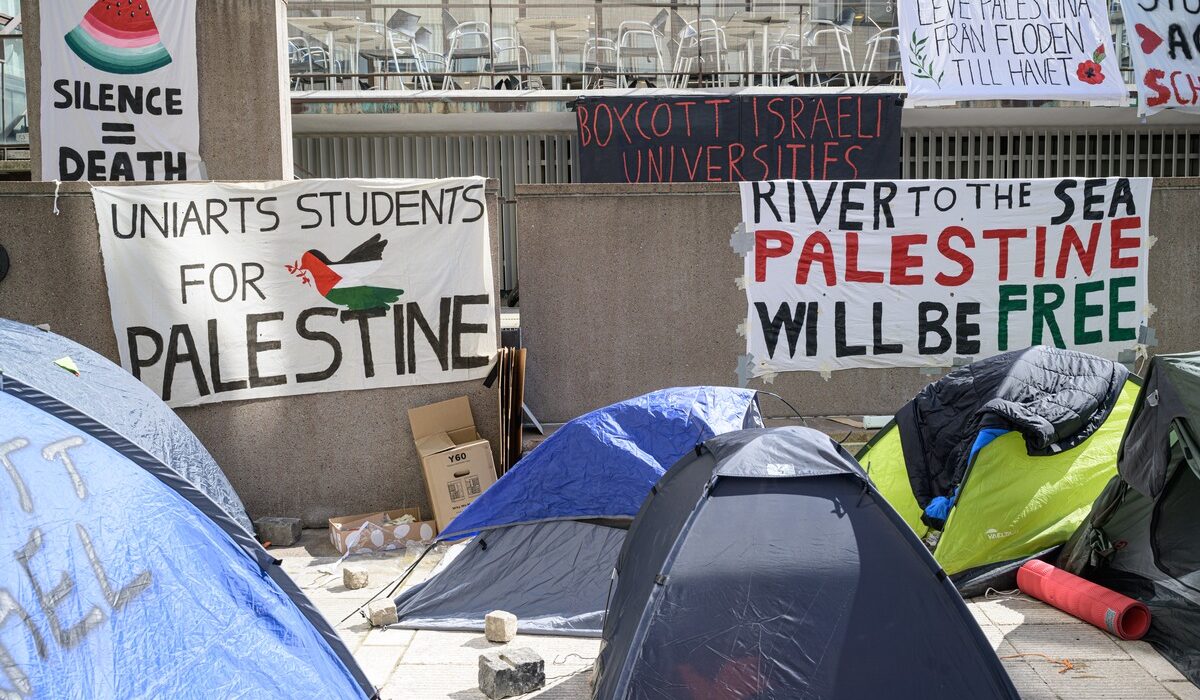
The academic boycott originated from the Palestinian Campaign for the Academic and Cultural Boycott of Israel (PACBI), which was launched in 2004. PACBI is a founding member of the Palestinian BDS National Committee (BNC) and is responsible for implementing this boycott within the BDS movement. As part of the struggle for the liberation of Palestine, it advocates a boycott of Israeli academic and cultural institutions.
Why boycott?
For decades, Israeli universities have played a crucial role in the planning, implementation, and justification of Israeli settler colonialism. They develop weapons systems and provide legal and moral legitimacy for colonization, large-scale military attacks against the Palestinian population, extrajudicial killings, and other human rights violations.
More infos here
The academic boycott is also strategically significant. This is reflected in assessments by senior Israeli politicians and institutions. In 2015, the then Israeli president described the academic boycott as a “first-rate strategic threat.” More recently, in April of last year, Israel’s Ministry of Intelligence and Strategic Affairs stated that the academic boycott poses a threat to “Israel’s scientific and technological standing in the world.” The achievements of the global movement for an academic boycott of Israel speak for themselves. In South Africa, Spain, Italy, Belgium, and many other countries, universities have ended, suspended, or restricted cooperation with Israeli institutions.
Together with other strategies of resistance, effective solidarity with the Palestinian people can be built in Münster and elsewhere. Join us!
Our plan in Münster
In Münster, we want to begin by focusing on the university as a key institution in the city, with around 42,000 students and 8,000 employees. For this reason, we have examined the issue of academic boycott and initiated extensive research into the connections between the University of Münster and Israel, as well as the broader role and character of Israeli universities.
With the findings of this research, we aim to increase pressure on the University of Münster to end its support for the Israeli state. As a first step, we have published an open letter addressed to the university administration outlining our demands, which you can sign here.
If you would like to become actively involved beyond that, you can find further information here.
Guidelines for Academic Boycott

PACBI has developed detailed guidelines outlining the principles of the academic boycott and how it is to be implemented. If you would like to determine whether a particular institution, project, or event is subject to boycott, you should consult the full guidelines.
- PACBI calls for a boycott and advocates the end of all forms of collaboration with Israeli academic institutions, including events, activities, agreements, and joint projects involving them.
- It also calls for a boycott of propaganda initiatives that promote Israel or seek to whitewash its violations of international law.
- The academic boycott targets complicit Israeli academic institutions, not individuals. This boycott should continue until Israeli academic institutions recognize the rights of the Palestinian people as outlined in the BDS call and end all forms of complicity in Israel’s violations of international law. In particular, the following activities are considered to be in violation of PACBI’s boycott call:
1. Academic projects or activities organized or sponsored by Israel, institutions allied with Israel, or pro-Israel lobbying groups.
This includes the convening of meetings of international bodies and associations, as well as academic activities or fact-finding missions in Israel that are funded by Israel, its complicit institutions, or its international lobbying organizations.
2. Research and development projects involving complicit Israeli academic institutions, the Israeli government, or complicit corporations.
This includes collaborative and joint research agreements or projects between: (a) international universities and complicit Israeli academic institutions (link) or companies, particularly military contractors; (b) international governments (or intergovernmental bodies such as the EU (link)) and the Israeli government; and (c) international companies and Israeli academic institutions.
3. International academic activities funded by Israel, its lobbying organizations, or its universities.
4. Speeches (including debates) by Israeli government officials or representatives of complicit academic institutions at international events.
5. Programs involving international students or scholars who enroll at a complicit Israeli institution.
This includes exchange programs and “study abroad” programs at Israeli universities that aim to provide international students with a “positive experience” of Israel while obscuring the realities of the occupation and the denial of Palestinian rights. It also includes international students enrolled in degree or non-degree programs at Israeli institutions, as well as international faculty members who teach or conduct research there.
6. Awards conferred upon Israeli government officials, complicit Israeli institutions, or their representatives.
7. Normalization projects
In the Palestinian context, normalization refers to any activity that creates the impression that Israel is a state like any other and that Palestinians, the oppressed, and Israel, the oppressor, are equally responsible for “the conflict.” Far from challenging the unjust status quo, such projects contribute to its continuation, are intellectually dishonest, and should be boycotted.
However, a joint Palestinian-Arab-Israeli project is not considered boycottable if: (a) the Israeli side of the project recognizes the full rights of the Palestinian people under international law (corresponding to the three rights outlined in the BDS call), and (b) the project or activity is one of “co-resistance” rather than coexistence.
8. Membership of Israeli associations in international organizations
Just as South Africa’s membership in global academic and other bodies was suspended during apartheid, Israel’s membership must also be suspended.
9. Publishing or peer-reviewing articles for journals issued by universities that collaborate with Israel.
10. Providing consultancy, evaluation, or peer-review services for Israeli universities
International academics who choose to review the academic work of lecturers or students at Israeli universities on a personal basis do not violate the boycott guidelines, as long as their names are not used by these universities in any way. However, serving on a formal review committee would constitute a violation of the boycott.
Inform you more
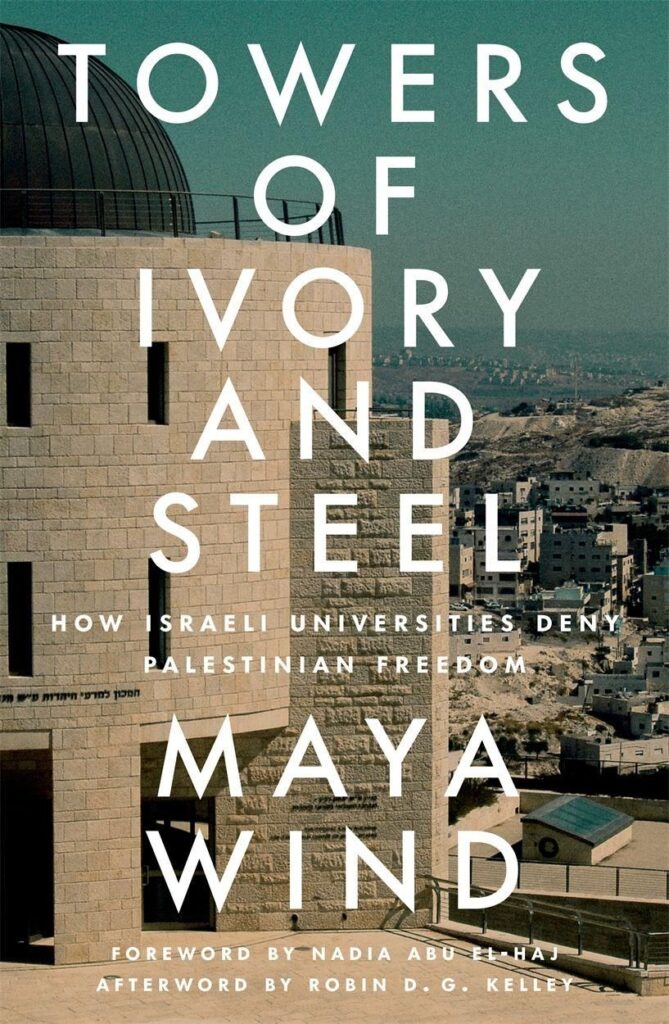
Towers of Ivory and Steel, How Israeli Universities Deny Palestinian Freedom
Maya Wind (2024)
Book on Israeli universities as pillars of the Israeli system of oppression against Palestinians
Here an interview with Maya Wind
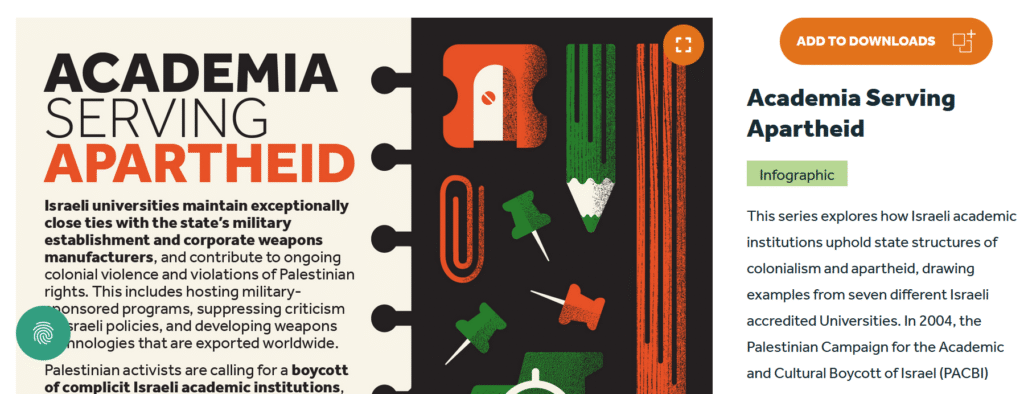
Visualizing Palestine gives info material and maps about the topic here
Video about academic boycott from Lucas Febraro